|
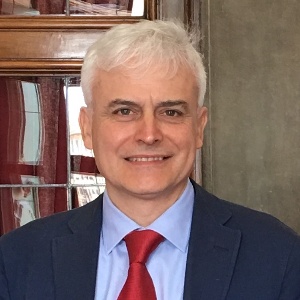
Francesco Marcelloni
University of Pisa
Italy
|
Short Bio
Francesco Marcelloni is full professor of Data Mining and Machine Learning at the University of Pisa. He is the Director of the Knowledge Hub on AI of the European Alliance Circle U., and coordinator of the multidisciplinary Good AI Lab and the public–private IT2PAO Lab at the University of Pisa. His main research interests include explainable artificial intelligence, federated learning, data mining for big data and streaming data, sentiment analysis and opinion mining, genetic fuzzy systems, and fuzzy clustering algorithms. He has co-edited four volumes, four journal special issues, and is (co-)author of a book
and of more than 300 papers in international journals, books and conference proceedings. Recently, he has received the 2021 IEEE Transactions on Fuzzy Systems Outstanding Paper award and the 2022 IEEE Computational Intelligence Magazine Outstanding Paper award. He serves as associate editor of IEEE Transactions on Fuzzy Systems (IEEE), Information Sciences (Elsevier) and Evolving Systems (Springer).
... More >>
|
Kurosh Madani
University of Paris-EST Créteil (UPEC)
France
|
Short Bio
Kurosh Madani is graduated in fundamental physics in June 1985 from PARIS 7 – Jussieu University. He received his MSc. in Microelectronics and chip architecture from University PARIS 11 (PARIS-SUD), Orsay, France, in September 1986. Received his Ph.D. in Electrical Engineering and Computer Sciences from University PARIS 11 (PARIS-SUD), Orsay, France, in February 1990. In 1995, he received the DHDR Doctor Hab. degree (senior research doctorate degree) from University PARIS 12 – Val de Marne. He works as Chair Professor in Electrical Engineering of Senart-FB Institute of Technology of University PARIS-EST Creteil (
UPEC), France. Co-creator of Images, Signals and Intelligent Systems Laboratory (LISSI / EA 3956) of UPEC in 2005, head of Intelligent Machines & Systems” research team of LISSI, he is also Vice-director of this laboratory. He has worked on both digital and analog implementation of massively parallel processors arrays for image processing, electro-optical random number generation, and both analog and digital Artificial Neural Networks (ANN) implementation. His current research interests include: - Complex structures and behaviors modeling, - self-organizing, modular and hybrid neural based information processing systems and their real-world and industrial applications, - humanoid and collective robotics - intelligent fault detection and diagnosis systems.
... More >>
Doctoral Consortium Co-Chairs

|
Maïssa Abdallah
ESEO
France
|
Short Bio
Maissa Abdallah is an associate professor at ESEO in Angers, France, a graduate engineering school specializing in electronics, computer science, networking, and telecommunications. She holds an engineering degree in Computer Science from the University of Technology of Compiegne (France) and earned her PhD in Real-Time Systems from the University of Nantes in 2014.Since 2024, her research has focused on biomedical applications, with a particular interest in classification methods and feature selection
techniques aimed at improving the predictive performance and interpretability of models applied to healthc
are data.
... More >>
|
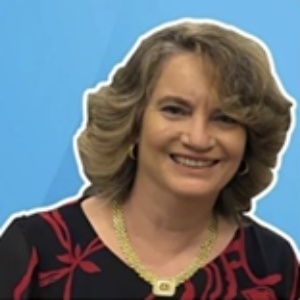
Daniela Barreiro Claro
Universidade Federal da Bahia (UFBA)
Brazil
http://formas.ufba.br/dclaro
|
Short Bio
Daniela B. Claro is a Full Professor at the Federal University of Bahia (Brazil). She earned a degree in Computer Science from Salvador University (1998) and obtained her Master's degree in Computer Science from the Federal University of Santa Catarina (2000) and her
Ph.D. in Computer Science - Université d'Angers - ESEO / France (2006). In 2009, she founded the FORMAS - Research Center on Data and Natural Language at CNPQ and she was its leader during the last 15 years, promoting research on Data Intelligence and Natural
Language Processing covering Semantic and Pragmatic approaches from Texts, Cloud
s, and Devices. Her main research areas are Semantic and Pragmatic Data Interoperability challenges, particularly Open Information Extraction, working with single and multilingual
solutions.
... More >>